
Pitbulls need a balanced diet that provides enough energy and essential nutrients for healthy growth, muscle development, strong bones, and overall well-being. The right amount of food depends on your dog’s age, body weight, activity level, metabolism, body condition, and the calorie density of the food.
For puppies, nutrition is especially important because they grow rapidly and have different nutritional requirements from adult dogs. Whether you choose a complete commercial diet or a properly formulated homemade or raw diet, the goal is to provide balanced nutrition without underfeeding or overfeeding.
How Much Should You Feed a Pitbull?
There is no single number of cups that is appropriate for every Pitbull. Daily food requirements vary according to:
- Age and life stage
- Current body weight
- Activity level
- Metabolism
- Body condition
- Reproductive status
- Expected adult size
- Calorie density of the food
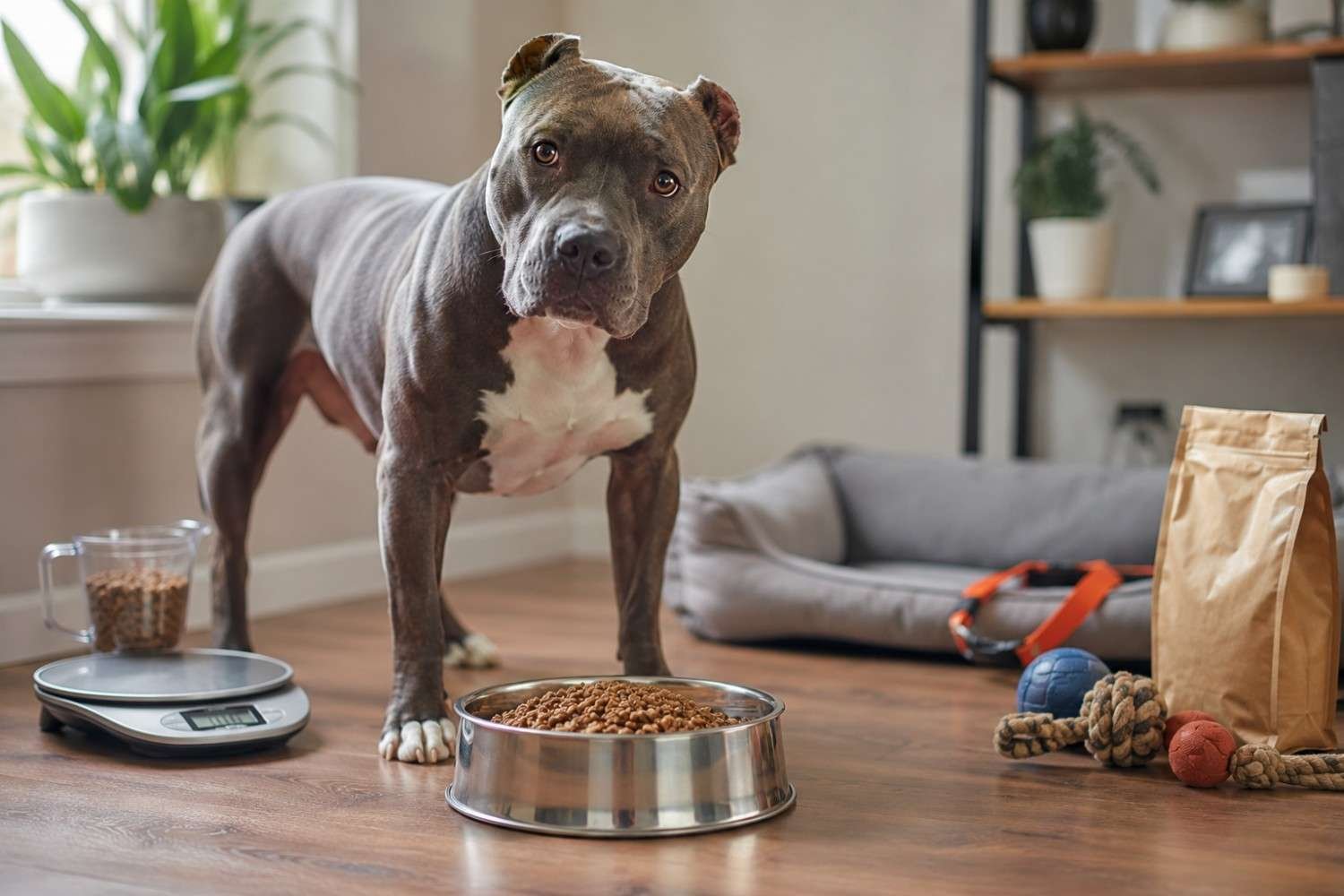
Start with the feeding guidance provided on your dog’s food label, then monitor body condition and weight regularly. Feeding amounts may need to be adjusted as your Pitbull grows, becomes more or less active, or changes body condition.
Understanding Pitbull Nutritional Needs
A healthy Pitbull diet should provide appropriate amounts of protein, fat, carbohydrates, vitamins, minerals, and other essential nutrients.
Protein and Muscle Development
High-quality protein supplies amino acids needed for muscle development, tissue maintenance, and normal body functions. Growing Pitbull puppies need balanced nutrition that supports their rapid development rather than simply receiving as much protein as possible.
Healthy Fats and DHA
Dietary fats provide concentrated energy and support normal body functions. DHA, an omega-3 fatty acid, is particularly important during puppy development because it supports normal brain and eye development.
Calcium, Phosphorus, Vitamins, and Minerals
Calcium and phosphorus play important roles in bone and skeletal development. Vitamins and minerals also support normal immune function, metabolism, and overall health.
Puppies should receive a nutritionally balanced diet formulated for their life stage rather than having individual supplements added without a specific nutritional reason.
How Often Should a Pitbull Eat?
Meal frequency generally changes as a Pitbull grows.
| Life Stage / Age | Feeding Frequency |
|---|---|
| Puppy (8–12 weeks) | 4 meals daily |
| Puppy (3–6 months) | 3 meals daily |
| Young Dog (6–12 months) | 2 meals daily |
| Adult and Senior Dogs | 2 meals daily |
Young puppies often benefit from multiple smaller meals because they have smaller stomachs and high energy requirements. As they mature, meals can generally be reduced to fewer feedings.
Individual dogs may require adjustments based on their health, appetite, activity, and body condition.
How Much Food Should a Pitbull Eat Each Day?
Rather than using one fixed number of cups for every Pitbull, determine the appropriate daily amount using your dog’s nutritional needs and the calorie density of the food.
For example, two dog foods may have different amounts of calories per cup. A food containing more calories per cup may require a smaller volume than a less calorie-dense food.
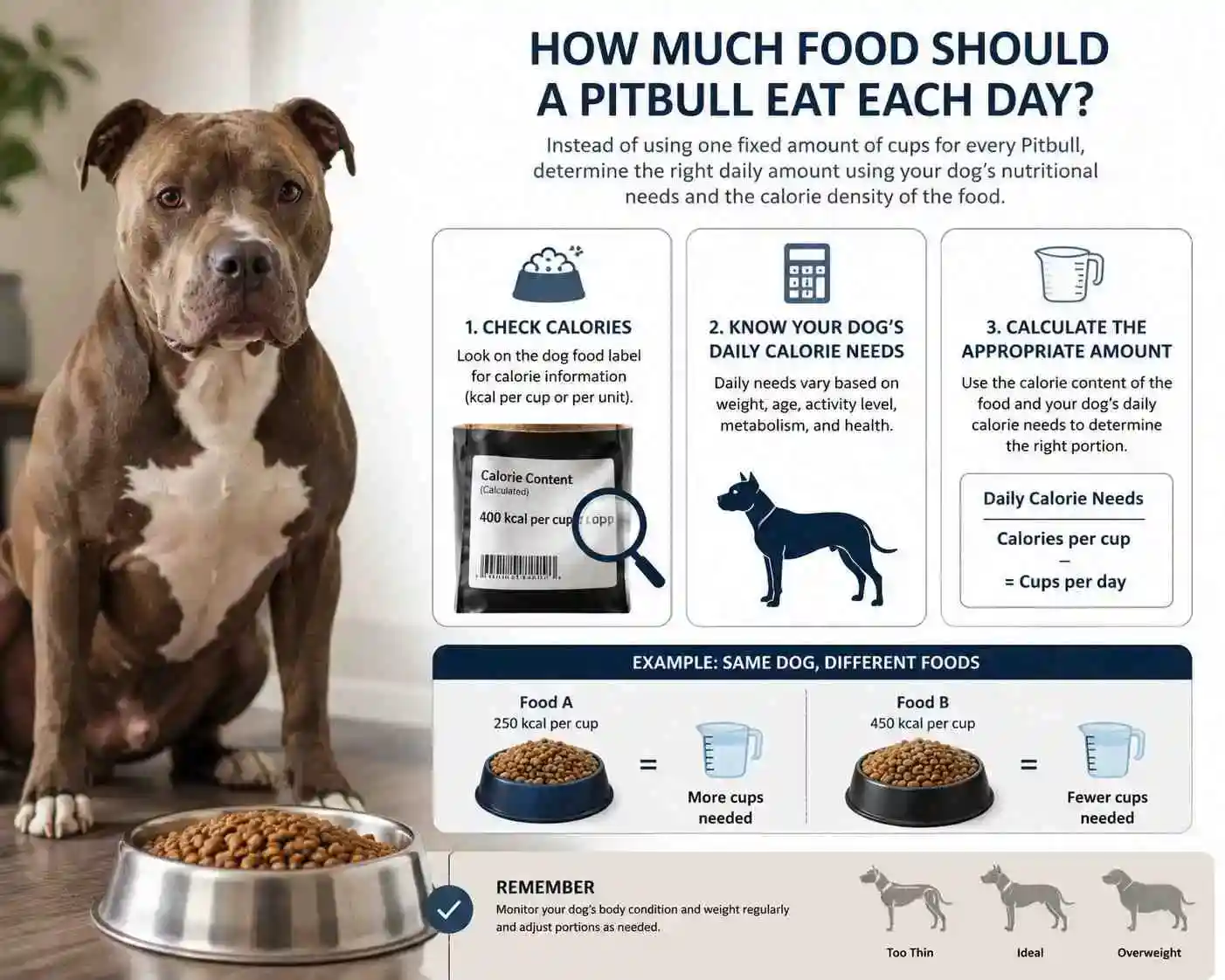
When checking a food label, look for its calorie information, usually expressed as kcal per cup or another unit of food. Use that information together with your dog’s recommended daily calorie intake to determine an appropriate portion.
Factors That Affect Portion Size
Your Pitbull may need more or less food depending on:
- Growth and age
- Current body weight
- Activity level
- Metabolism
- Body condition
- Reproductive status
- Food calorie density
- Individual nutritional requirements
Feeding charts are useful starting points, but they should not replace regular monitoring of your dog’s body condition.
Pitbull Puppy Feeding Guide
Pitbull puppies require carefully balanced nutrition because their bodies are developing rapidly.
8–12 Weeks
Puppies in this age range generally benefit from several small meals throughout the day. A puppy-formulated complete and balanced food should provide the nutrients required for growth.
3–6 Months
As the puppy grows, feeding frequency can generally decrease to around three meals per day. Portion sizes should be adjusted according to growth, body condition, activity, and the food’s feeding recommendations.
6–12 Months
Older puppies can generally transition toward two meals per day. Continue using a diet appropriate for the puppy’s growth stage until the appropriate transition to adult nutrition.
How to Adjust Your Pitbull’s Food as They Grow
Your Pitbull’s food requirements will change throughout life. Puppies may need frequent adjustments as their weight and activity level change, while adult dogs generally require food to maintain a healthy body condition.
Regularly monitor:
- Body weight
- Body condition
- Appetite
- Activity level
- Growth
- Stool quality
- Changes in daily routine
If your dog is gaining excessive body fat, the daily portion may need to be reassessed. If your dog is losing weight unexpectedly or failing to grow normally, veterinary evaluation may be appropriate.
How to Tell If Your Pitbull Is Getting the Right Amount
Body condition is an important way to evaluate whether feeding amounts are appropriate.
Do not rely on the scale alone. Two Pitbulls can have similar body weights while having different amounts of muscle and body fat.
Monitor your dog’s overall body shape and condition regularly. Feeding should aim to maintain a healthy body condition rather than simply reaching a particular number on the scale.
Choosing Food for a Pitbull
Choose a food that is appropriate for your dog’s life stage and provides complete and balanced nutrition.
For puppies, select food formulated for growth. For adult dogs, use a diet designed for adult maintenance. Feeding recommendations should be used as a starting point and adjusted when necessary based on your dog’s individual condition.
If you choose a homemade or raw diet, nutritional balance is especially important. Simply combining meat, bones, organs, or other ingredients does not automatically create a complete diet. A properly formulated diet should provide all required nutrients in appropriate proportions.
Treats, Water, and Other Feeding Considerations
Fresh drinking water should always be available.
Treats and other foods also contribute to your dog’s overall daily intake. If your Pitbull receives frequent treats, chews, table scraps, or other extras, account for them when evaluating the overall diet.
Avoid making frequent unexplained changes to your dog’s food. When changing diets, a gradual transition can help your dog adjust more comfortably.
Common Pitbull Feeding Mistakes
Common mistakes include:
- Feeding the same amount regardless of age or activity
- Relying exclusively on cups without checking calorie density
- Ignoring body condition
- Overfeeding treats and extras
- Feeding an inappropriate life-stage diet
- Adding supplements without determining whether they are needed
- Making sudden food changes
- Assuming every Pitbull has identical calorie requirements
The best feeding plan is one that provides complete nutrition while maintaining an appropriate body condition as your dog grows and changes.
How many times a day should a Pitbull puppy eat?
Pitbull puppies generally eat more frequently than adult dogs. Puppies around 8–12 weeks may eat four meals daily, while puppies from 3–6 months commonly eat three meals daily. By 6–12 months, many can transition to two meals daily.
How many cups of food should I feed my Pitbull?
There is no universal number of cups. The appropriate amount depends on your Pitbull’s age, weight, activity, metabolism, body condition, and the number of calories contained in the food.
Should I feed my Pitbull based on body weight?
Body weight is an important factor, but it should not be the only consideration. Activity level, life stage, metabolism, body condition, and food calorie density also affect feeding requirements.
How do I know if I am overfeeding my Pitbull?
Regularly monitor body condition and weight. Excessive body fat or rapid unwanted weight gain can indicate that the current feeding amount needs to be reassessed.
Should Pitbull puppies eat adult dog food?
Puppies have different nutritional requirements from adult dogs. A food specifically formulated and appropriate for growth is generally preferable during the puppy stage.
Does every Pitbull need the same amount of food?
No. Individual feeding requirements vary considerably. Age, body weight, activity, metabolism, reproductive status, body condition, and food calorie density can all influence the appropriate daily amount.
Key Takeaway
The right Pitbull feeding plan is not simply a fixed number of cups or a percentage of body weight. Start with an appropriate complete and balanced diet, follow its feeding guidance, consider calorie density and life stage, and regularly monitor your dog’s body condition and growth.
For puppies especially, consistent monitoring and appropriate nutrition are important for supporting healthy development.